
Find Death Records in Arizona
Arizona death certificates are vital records kept by the Arizona Department of Health Services and county public health departments across the state. These records document deaths that occurred in Arizona from 1903 to the present. You can search for Arizona death records through the state vital records office, any of the 15 county health departments, or online through authorized vendors. Arizona is a closed record state, which means you must meet eligibility requirements to get a certified copy of a death certificate. Genealogy records for deaths 50 years old or older are open to the public for family history research.
Arizona Death Records Quick Facts
Eligibility for Arizona Death Certificates
Arizona law limits who can get a certified copy of a death certificate. Only persons 18 years of age or older may apply. You must also prove your relationship to the person who died or show a legal interest in the record. This is not an open record state for vital records. Arizona Revised Statutes § 36-342 protects the privacy of vital records by restricting access to eligible parties only.
The Arizona Department of Health Services explains who can get death certificates on their vital records portal. Parents of the decedent can apply if their name appears on the birth certificate of the deceased. A surviving spouse must provide a marriage certificate. Adult children need to submit their own birth certificate showing the decedent as a parent. Siblings must provide birth certificates for both themselves and the decedent to prove the relationship. Attorneys, funeral directors, government agencies, insurance companies, banks, and hospitals can also request death certificates if they submit proof of their status and business need.
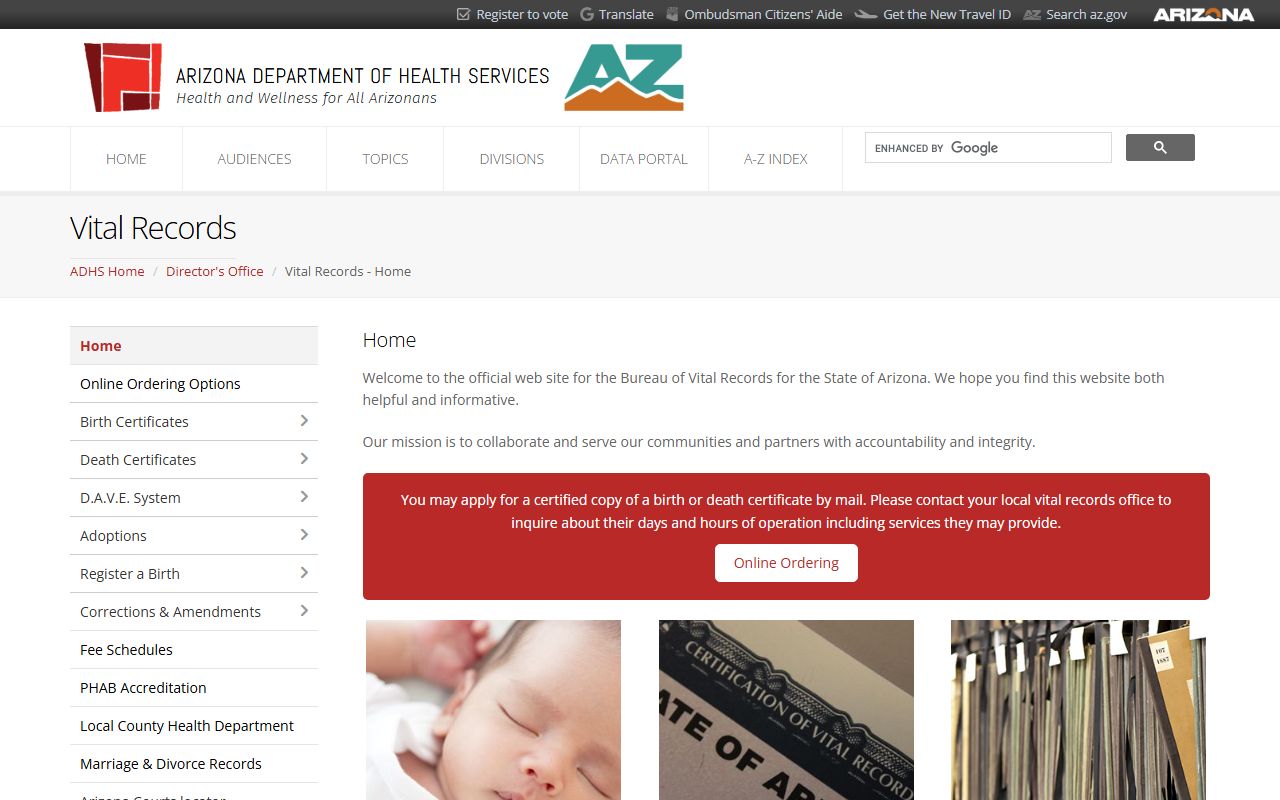
Genealogists and family members doing family history research have a different path. Arizona makes death records available for genealogy purposes if the death occurred 50 years ago or more. These records are accessible to anyone through the Arizona Genealogy Record Search database. You can search deaths from 1870 to 1970 without proving a relationship. The images you get from this database are not certified copies, but they work for family tree research.
If you do not meet the eligibility rules, you can still get a copy with help from someone who does. An immediate family member can write a letter allowing Arizona to release the record to you. That letter must be signed by the surviving spouse or another adult family member who qualifies. You also need to include a copy of your government photo ID when you apply.
Where Death Certificates Are Issued
The Bureau of Vital Records at the Arizona Department of Health Services is the main state office for death certificates. The bureau is located at 150 North 18th Avenue, Suite 120, Phoenix, AZ 85007. They keep records for deaths that occurred anywhere in Arizona from July 1909 to the present. The office also has some older death records dating back to 1877 from county sources and delayed registrations. You can contact them at 602-364-1300 or toll-free at 888-816-5907. The mailing address for record requests is PO Box 6018, Phoenix, AZ 85005.
County public health departments can also issue Arizona death certificates. Each of the 15 counties has a vital records office that can access the state database. Many counties offer same-day service if you apply in person. Some counties only process deaths that occurred in their county from 2008 forward, while others can access the full state system. Maricopa County has five locations where you can request death certificates, including offices in Phoenix, Mesa, Peoria, Glendale, and Goodyear. Pima County operates two offices in Tucson and one in the northwest area.
You can visit the AZDHS vital records website to see the full list of county offices and their contact details. Each county sets its own hours and may have different payment options. Some accept credit cards, while others only take money orders or cash. It helps to call ahead before you go to make sure they can process your request that day.
Note: The state office in Phoenix no longer offers walk-in service due to changes made during COVID-19.
How to Order Death Records
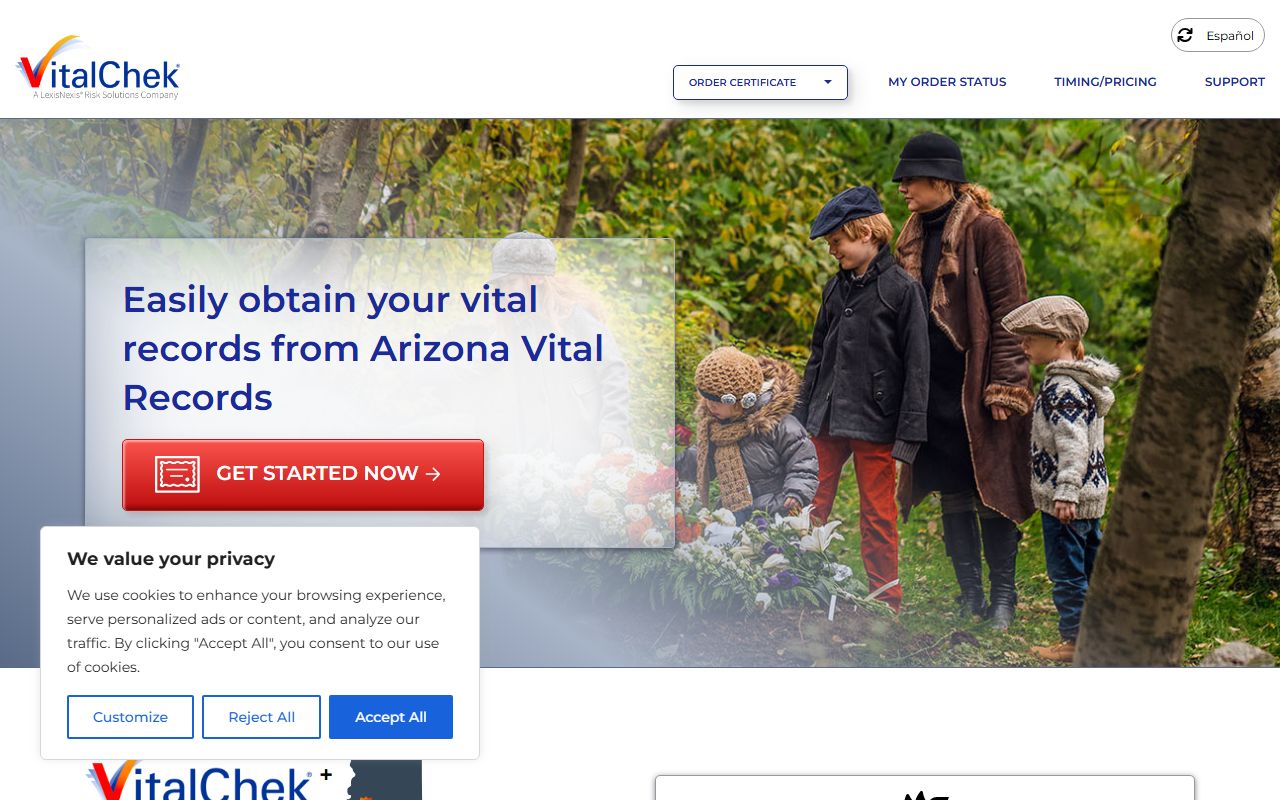
Arizona gives you three ways to order a death certificate. Online ordering through VitalChek is the fastest option for most people. VitalChek is the authorized partner for the Arizona Department of Health Services. You start your order at vitalchek.com and submit your information along with proof of eligibility. VitalChek charges service fees on top of the state fee. They accept credit and debit cards. Most orders arrive in 7 to 10 business days, or you can pay extra for expedited shipping.
Mail requests go to the Bureau of Vital Records at PO Box 6018, Phoenix, AZ 85005. You need to fill out the official application form VS-159, which you can download from the AZDHS website. Include a clear copy of both sides of your government-issued photo ID. Attach proof of your relationship, such as a birth certificate or marriage certificate. Sign the form with your original signature. Do not mail cash. Send a check or money order payable to Bureau of Vital Records. Include a self-addressed stamped envelope. Processing time for mail orders is typically 10 to 15 business days after they receive your complete application.
In-person requests work best at county health departments. Walk into any county vital records office with your ID and proof of relationship. Fill out the application there. Pay the fee with cash, card, or money order depending on what that county accepts. Many counties can print your certificate the same day if the record is in the system and your paperwork is in order. Some counties require appointments, so call first.
For genealogy searches of deaths from 1870 to 1970, use the free online search tool at the Arizona Department of Health Services. This database lets you search by name, date range, and other details. The images are free to view and download, but they are not certified copies.
Genealogy Database Access
The state provides a free genealogy search tool for deaths 50 years old or more. This covers deaths from 1870 through 1970. You can search by first name, last name, mother's maiden name, date of birth, and date of death. The system returns images of the original death certificates.
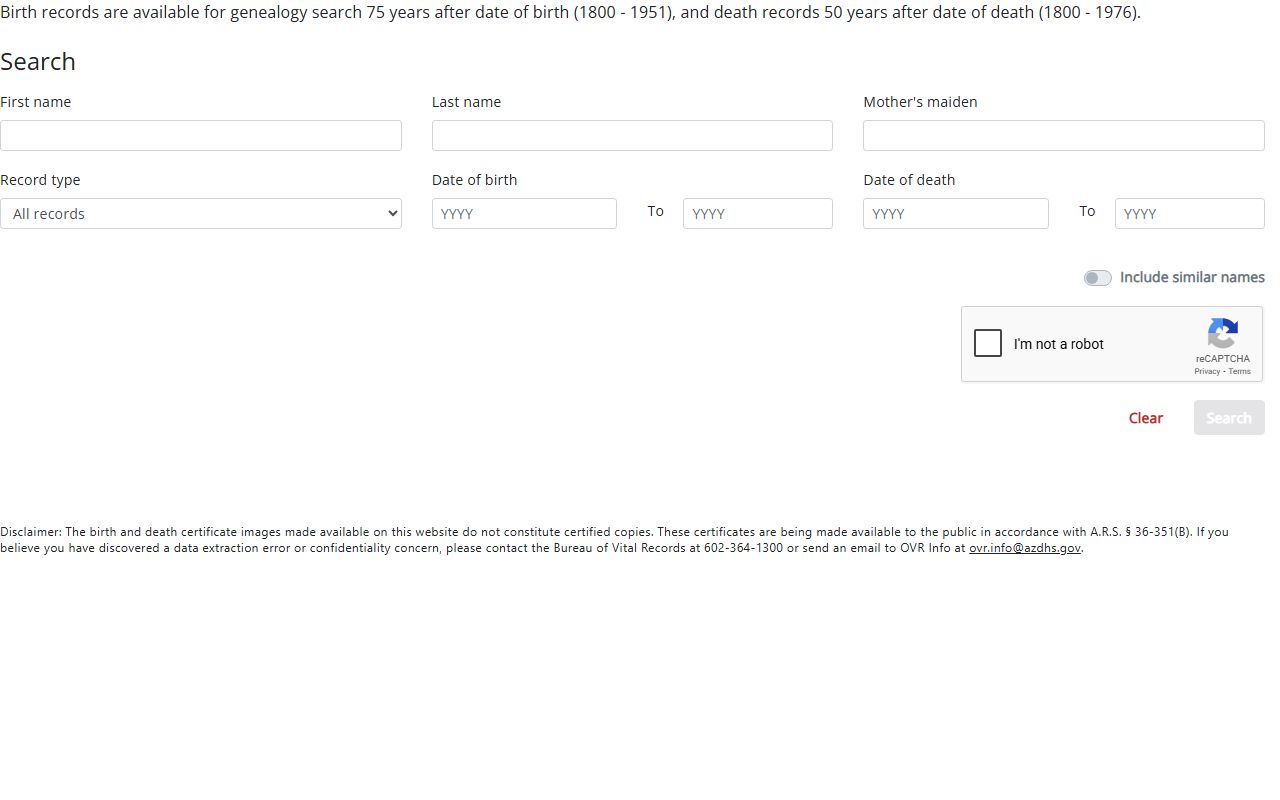
These images are not certified. They cannot be used for legal purposes like settling estates or claiming benefits. But they work well for building family trees and doing research. The disclaimer on the site explains that the certificates are made available under Arizona Revised Statutes § 36-351. If you find an error in the data, you can contact the Bureau of Vital Records at 602-364-1300.
Death Certificate Costs
A certified death certificate costs $20 in Arizona. This fee covers a search and one copy of the record. The state also adds a $1 surcharge on all death certificates under Arizona Revised Statutes § 36-341, so the total is $21 when you order from the state office. County offices may charge the same fee or set their own rates. Most counties charge $20 per copy.
Corrections or amendments to a death certificate cost $30 for the first copy. Each additional copy of the corrected certificate is $20. The correction fee applies when you need to change information on an existing record, such as fixing a misspelled name or wrong date. County offices can only amend records for deaths from 2008 forward. Older records must go to the state Bureau of Vital Records for amendments.
VitalChek adds service fees when you order online. These fees vary based on shipping speed and payment method. Expect to pay $10 to $20 in extra fees on top of the state cost. You can avoid these fees by ordering directly through the mail or visiting a county office in person. Some counties also charge a convenience fee if you pay with a credit or debit card. Cash and money orders usually have no extra charge at the county level.
Information on Death Certificates
An Arizona death certificate shows the full name of the deceased, their date of birth, date of death, and place of death. It lists the county where the death occurred and the city or town if applicable. The certificate includes the deceased's Social Security number, occupation, and residence address. It also shows the names of the deceased's parents, including the mother's maiden name.
The cause of death appears on the certificate along with other medical facts. A physician or medical examiner fills out this part of the certificate. The manner of death is listed as natural, accident, suicide, homicide, or undetermined. For deaths from natural causes, the certificate shows the disease or condition that led to death. Injury deaths include a description of how the injury happened.
The certificate also names the informant, who is the person that provided the personal facts about the deceased. This is often a family member or the funeral director. The funeral home that handled the body is listed along with whether the body was buried, cremated, or otherwise disposed. The place of burial or cremation may also be noted if that information was provided at the time of registration.
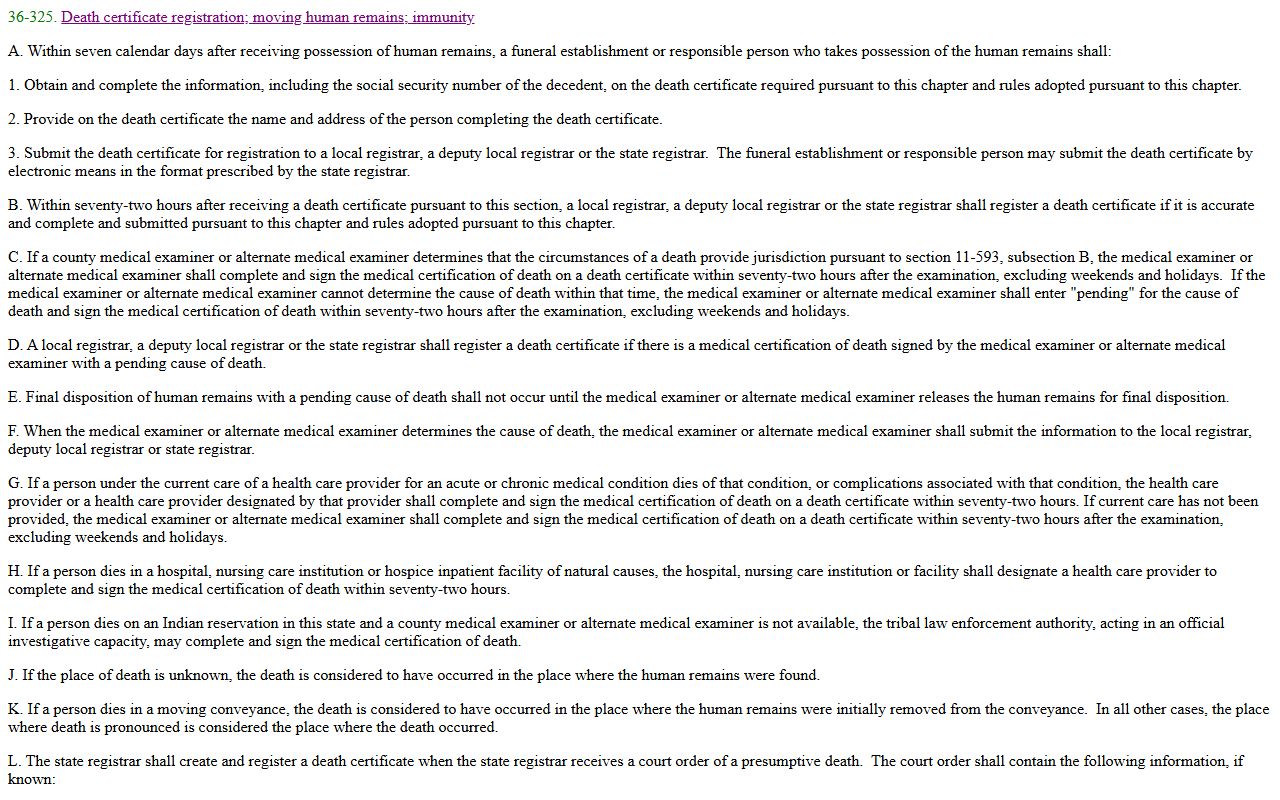
Under Arizona Revised Statutes § 36-325, funeral establishments have seven days to complete and submit a death certificate to a local registrar or the state registrar. The registrar then has 72 hours to register the certificate if it is accurate and complete. This law keeps the death registration process moving quickly so families can get copies when they need them.
How Long It Takes
Same-day service is available at many county vital records offices if you apply in person. Maricopa County, for example, can often issue certificates the same day you request them. But this depends on whether the death certificate has been fully processed and entered into the state system. Recent deaths may not be available yet. In Arizona, it can take 3 to 5 business days after a death for the certificate to be complete and registered. Some cases take longer if the medical examiner is involved or if the cause of death is pending investigation.
Mail requests to the state Bureau of Vital Records take 10 to 15 business days from the time they receive your application. This includes processing time and return mail time. If your application is missing required documents or the fee is wrong, it will take longer because they have to contact you. VitalChek orders processed online typically arrive in 7 to 10 business days for standard shipping. Expedited options can cut this to 3 to 5 days if you pay the extra fee.
Pima County warns that their processing time for mail orders can be 4 to 6 weeks due to high demand. They are receiving many birth certificate requests because of REAL ID requirements, which has slowed down all vital records processing. Other counties may have similar delays, so it helps to call and ask about current wait times before you send in your request.
Arizona Death Record Laws
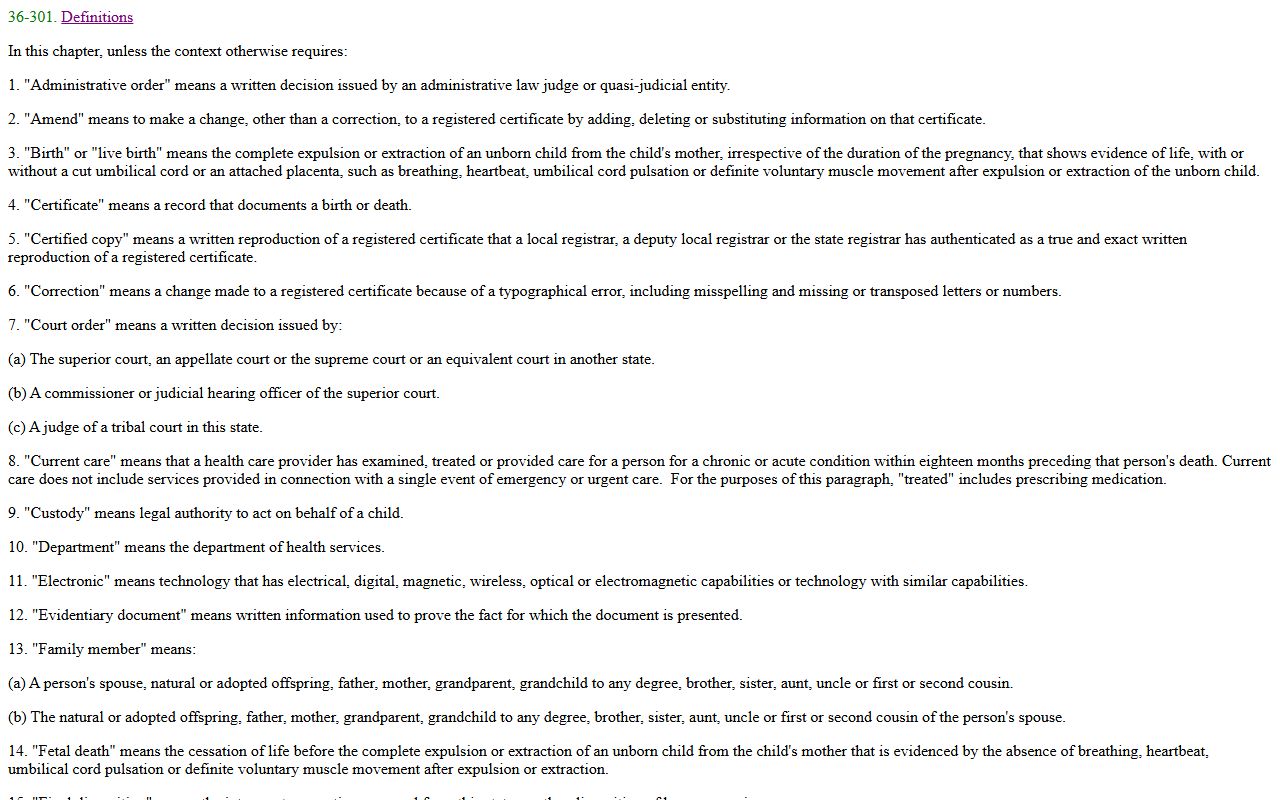
Arizona Revised Statutes Title 36, Chapter 3 governs vital records, including death certificates. ARS § 36-301 defines key terms used in the vital records law. A certificate is a record that documents a birth or death. A certified copy is a written reproduction that the state registrar or local registrar has authenticated as a true copy of the registered certificate. A vital record means a registered birth or death certificate. These definitions matter when you request records because only certified copies have legal weight.
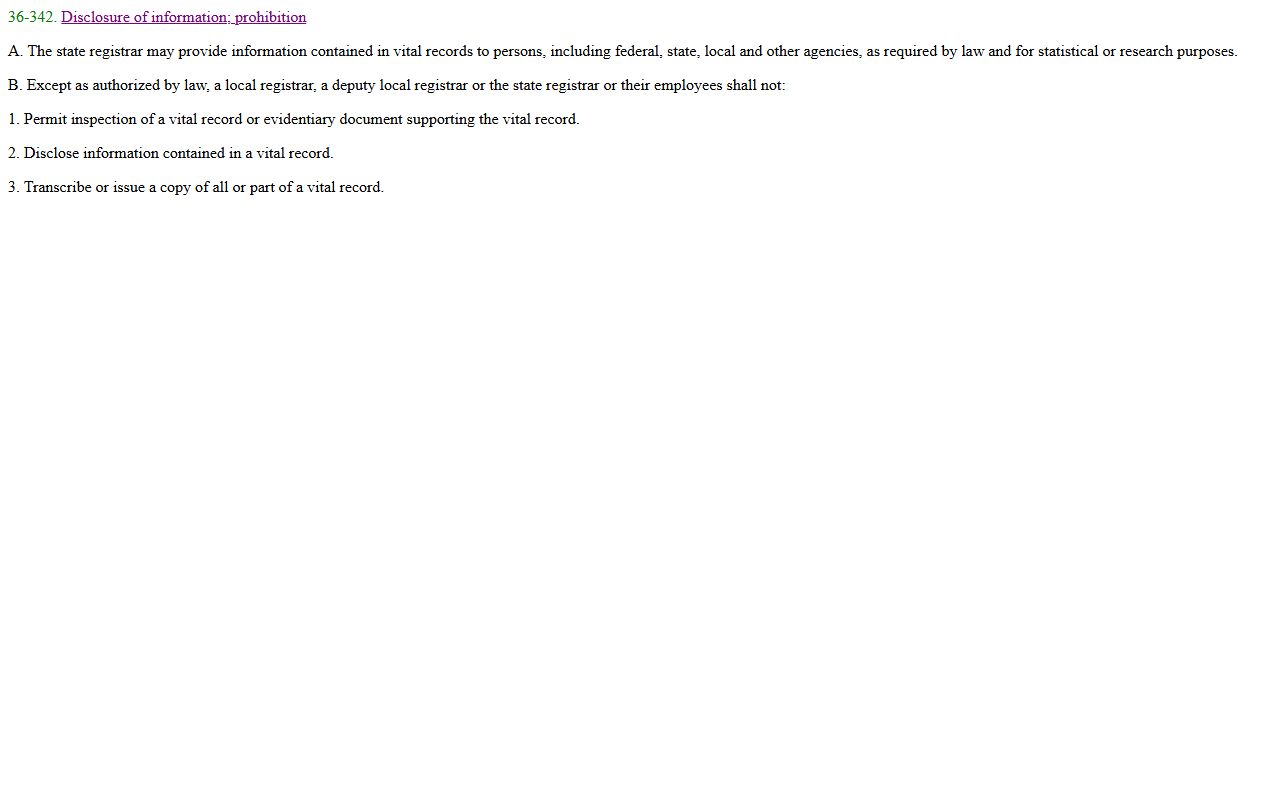
ARS § 36-342 protects the confidentiality of vital records. This statute says that local registrars, deputy local registrars, the state registrar, and their employees cannot permit inspection of a vital record except as authorized by law. They cannot disclose information from a vital record or issue a copy unless the law allows it. This is why Arizona is called a closed record state for vital records. The law aims to protect the privacy rights of citizens.
Government agencies can get copies of vital records for official purposes under ARS § 36-324. The Department of Economic Security gets free access to vital records for child support cases and public benefit matters. Other government agencies can also get copies or access if they need the records for their official work. Researchers working on medical or scientific projects can request access by writing directly to the Bureau of Vital Records with a detailed explanation of their research purpose.
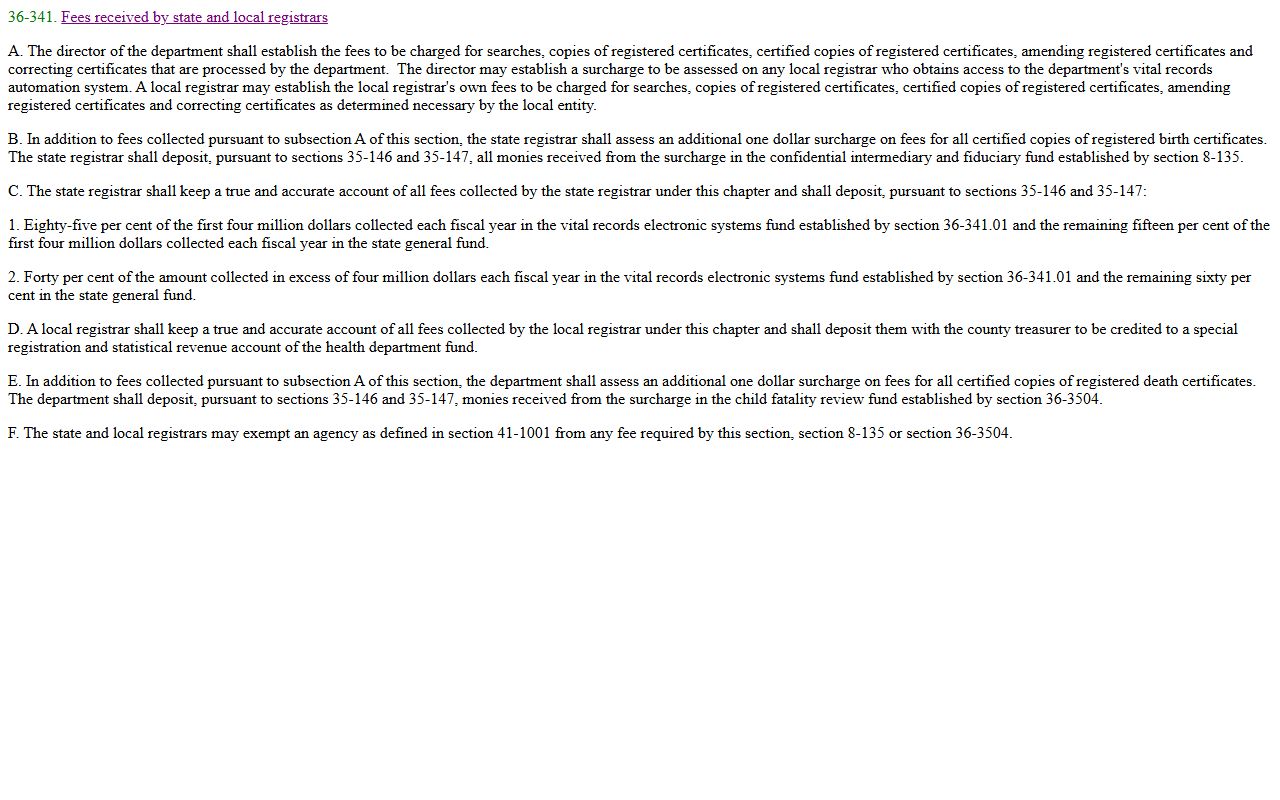
The director of the Arizona Department of Health Services sets the fees for vital records under ARS § 36-341. This statute allows the director to charge fees for searches, copies, certified copies, amendments, and corrections. Local registrars can set their own fees for the same services at the county level. The law also imposes the $1 surcharge on all certified death certificates, which goes into a special state fund.
Presumptive Death and Fetal Death
Arizona law covers deaths even when human remains are not found. Under the definitions in ARS § 36-301, presumptive death means a court has determined that a death occurred or is presumed to have occurred, but the body was not located or recovered. If a person is convicted of murder but the victim's body is never found, that conviction serves as proof of death. The court forwards a record of the conviction to the state registrar, who then creates and registers the death certificate using information from the court, family members, or other reliable sources.
Fetal death certificates are also available in Arizona. A fetal death means the cessation of life before the complete expulsion or extraction of an unborn child from the mother, evidenced by the absence of breathing, heartbeat, umbilical cord pulsation, or voluntary muscle movement. Parents can request a certified copy of a fetal death certificate if they meet the same eligibility requirements as for regular death certificates. These records are not available through VitalChek and must be requested directly from the Bureau of Vital Records or a county office. The fee is $20, the same as for other death certificates.
Death Records by Arizona County
Each county in Arizona has a vital records office that can issue death certificates. Most counties can access the full state database, while a few only handle deaths from 2008 forward. Select a county below to find contact information and office locations.
Death Records in Major Arizona Cities
Cities in Arizona do not issue death certificates. All death certificates come from the state or county level. But if you live in a major city, you can find the closest vital records office and learn which county handles your area. Pick a city to see local resources.